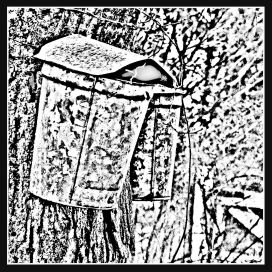
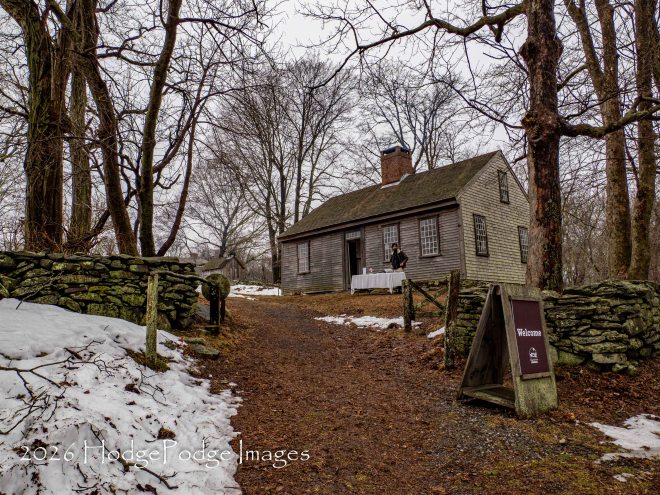
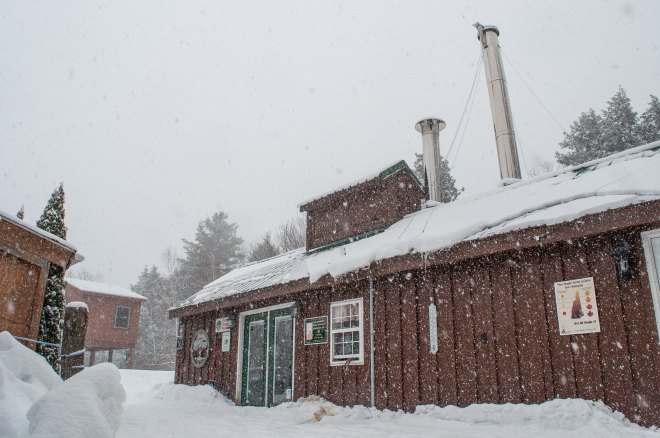
As the maple season begins, I decided to begin this year’s Adventures in Rhode Island and discovered a Festival at a living history site—Coggeshall Farm in Bristol. I planned a trip on Saturday, March 7, 2026, to experience this site that I’d not been aware of.
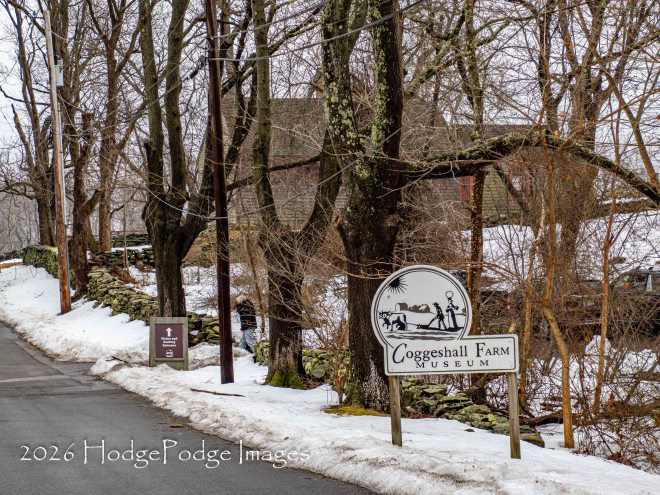
Coggeshall Farm is part of the land acquired by the State of Rhode Island from the Samuel P. Colt estate in 1965. When the land was purchased, the property contained several historic buildings which the Bristol Historical Society aimed to preserve. Their efforts led to this parcel of land being transformed into a museum dedicated to farm life, eventually evolving into a living history farm museum. In 2020, the farm partnered with Old Sturbridge Village, which now manages its daily operations, ensuring the site remains a vibrant educational resource.
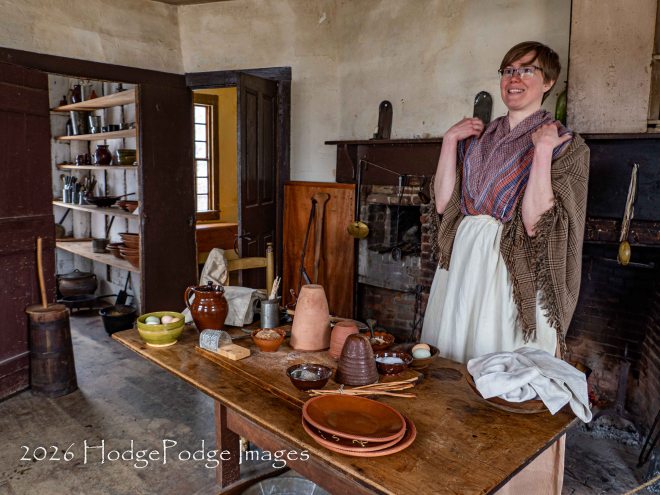
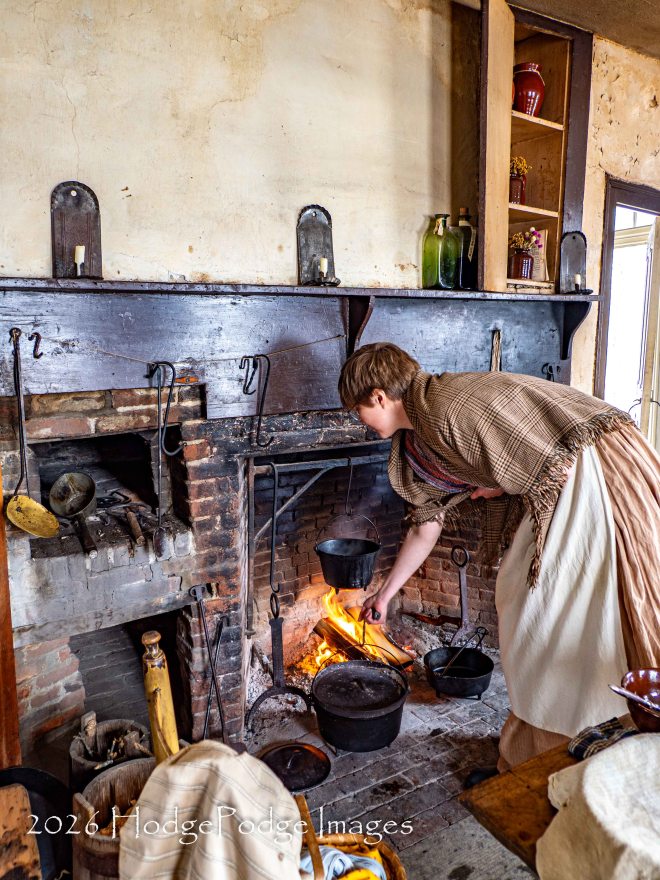
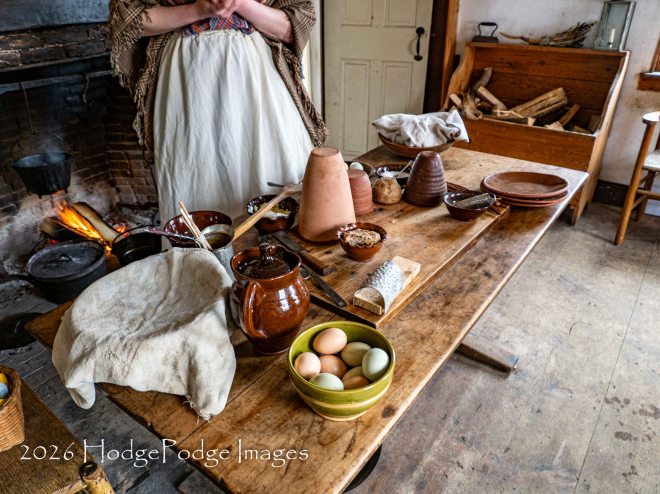
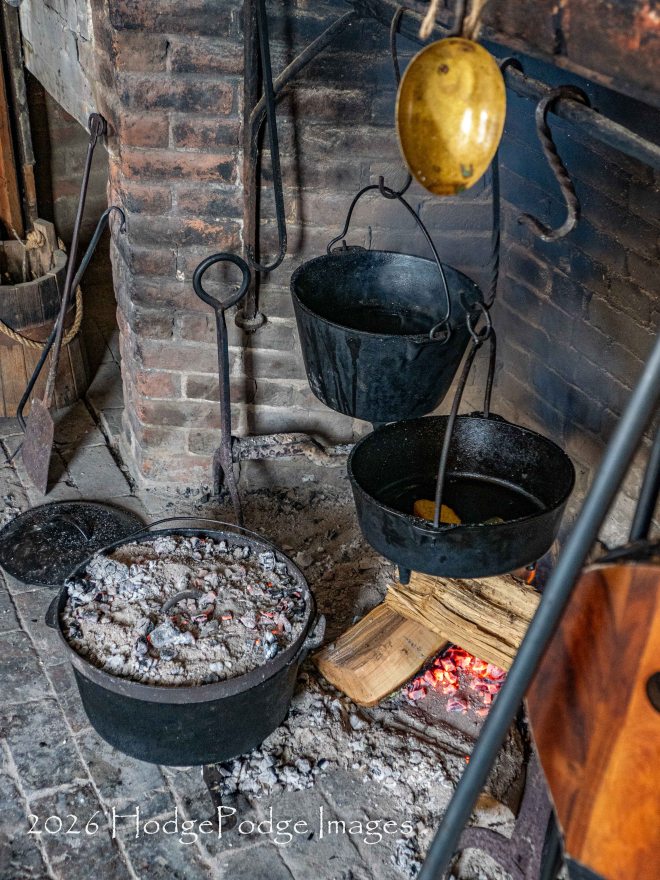
Upon entering the property, I was greeted warmly by Ethan, who provided me with a map and shared information about the day’s activities. The first building I encountered was the Tenant Farmhouse. Inside, I found a well-furnished kitchen featuring a fireplace with a bread oven—though Sara, a staff member, mentioned this feature was not invented in 1790. The kitchen was equipped with various dishes and utensils for cooking and eating, giving a glimpse into colonial life. Sara was just beginning her day’s demonstration, and I made a mental note to return later to see her in action.
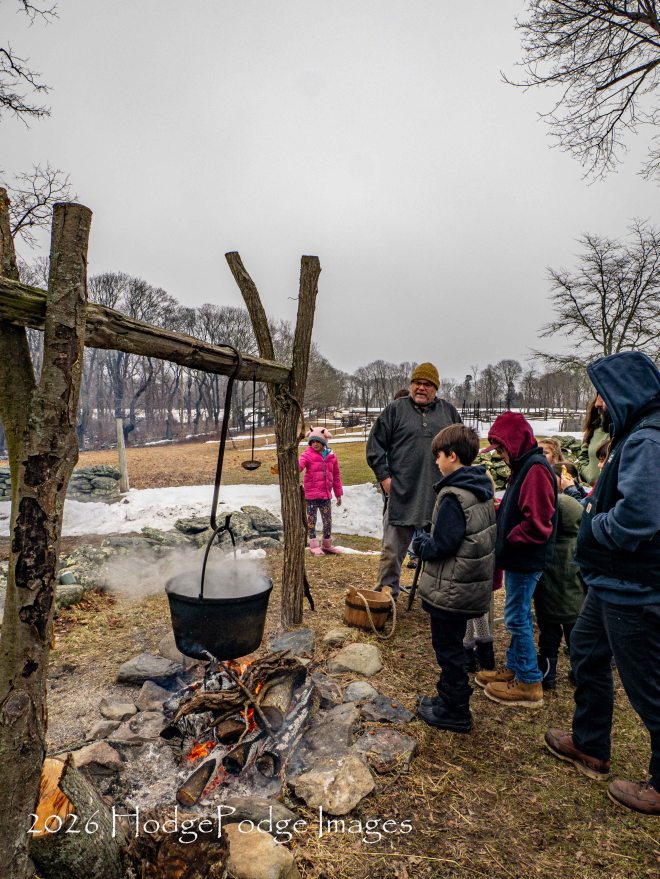
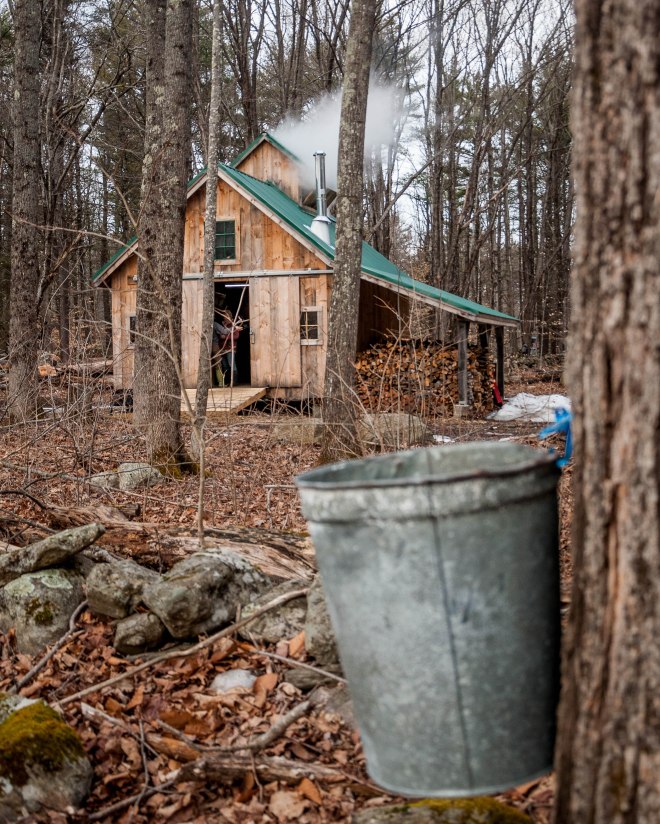
As I approached the hill, I encountered a docent boiling maple sap in a large iron kettle over an open fire, suspended by a pothook shaped like an elongated “s.” The scene attracted a crowd, though it was unclear whether their interest was in the maple syrup or the crackling fire.
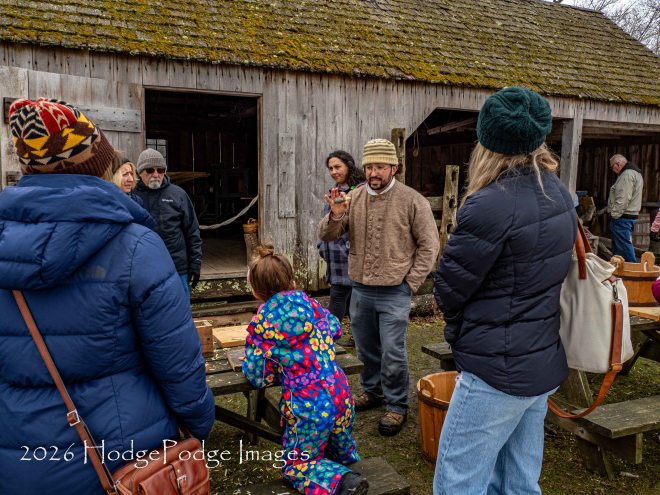
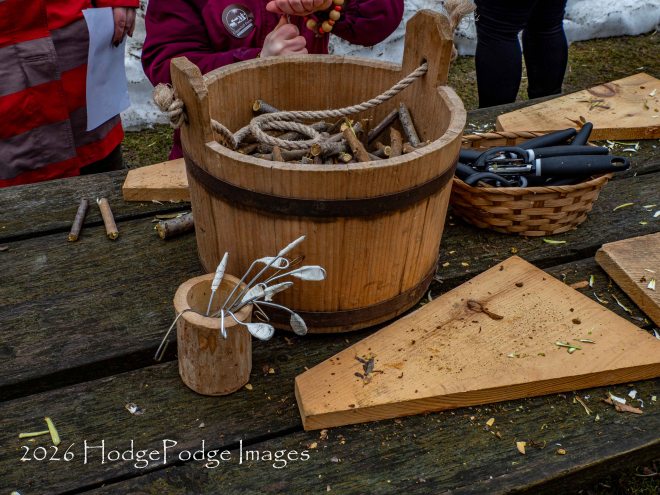
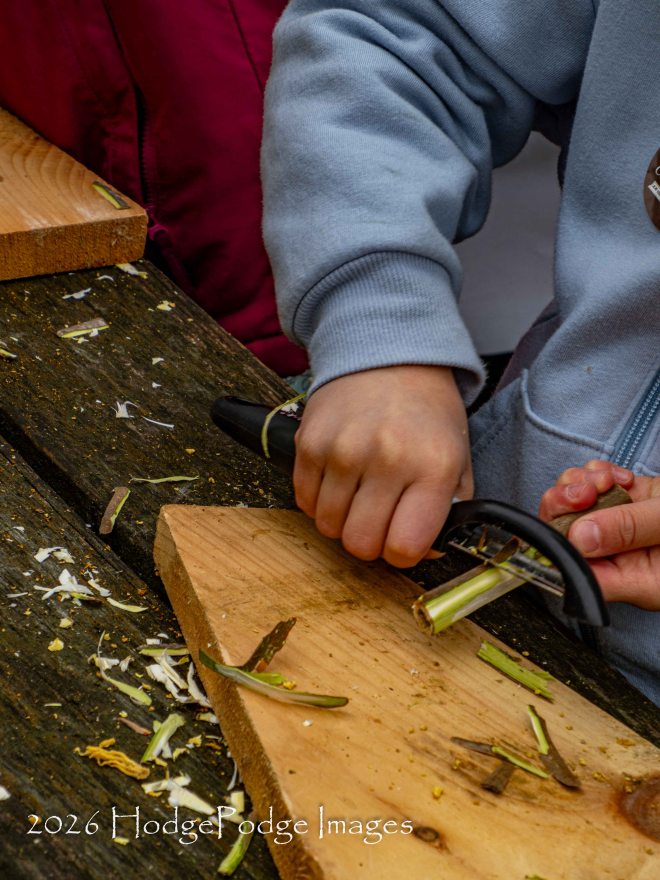
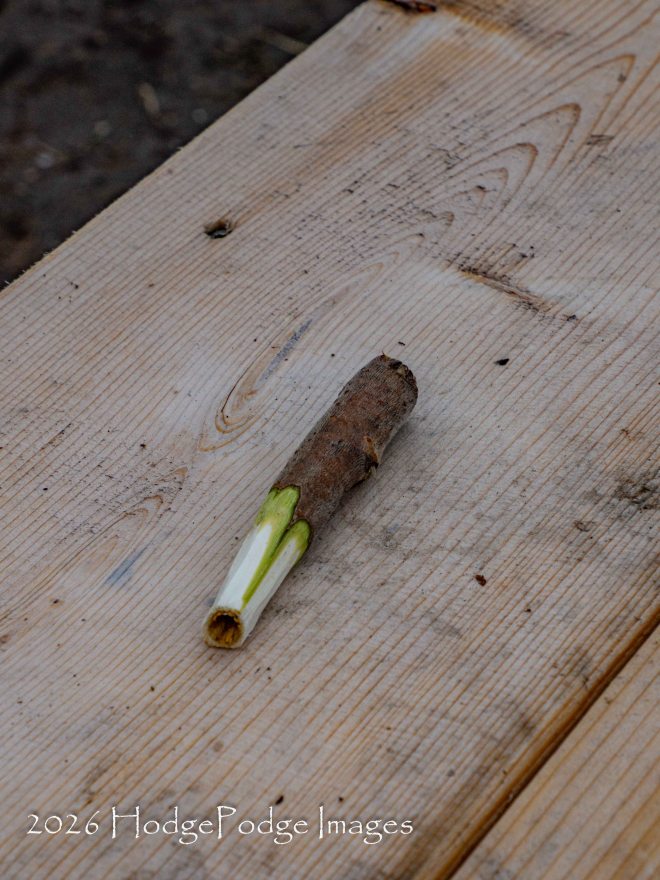
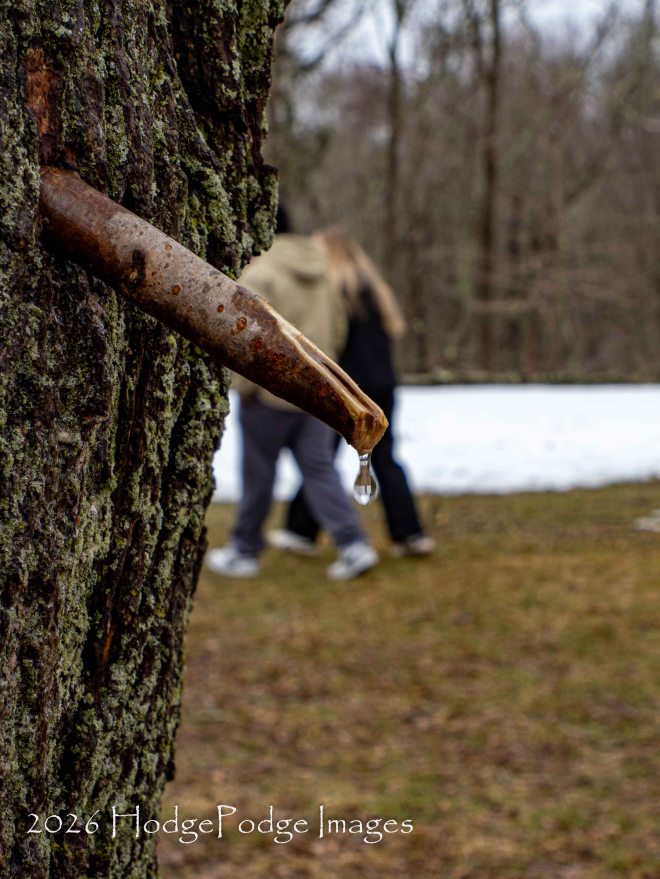
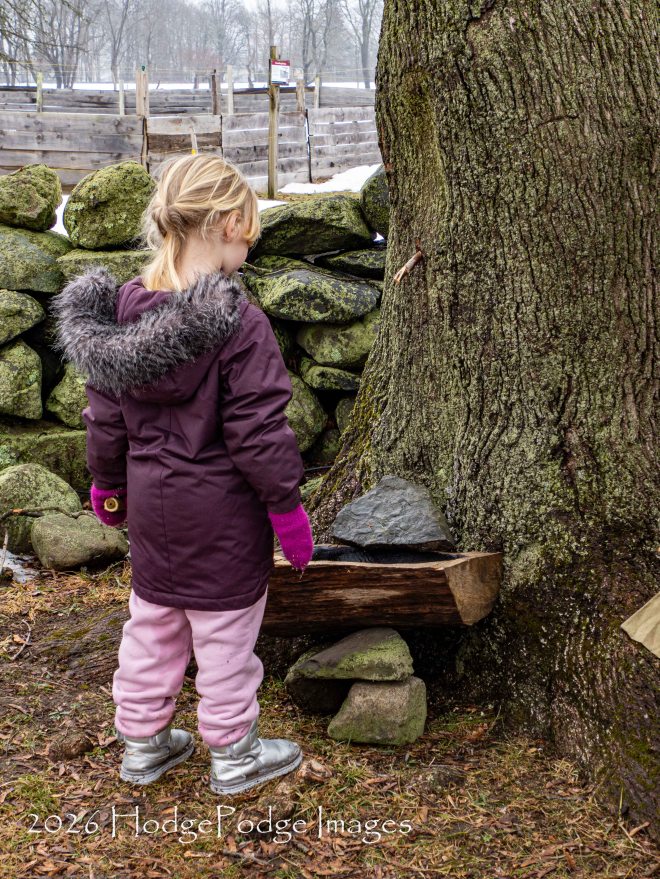
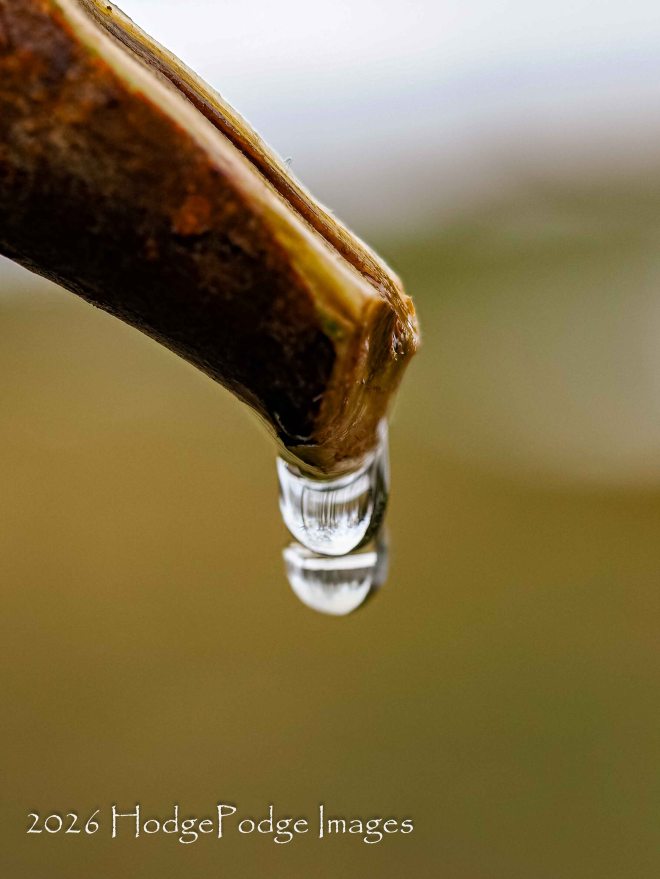
Near the wood shop, a docent was assisting visitors in making spiles from sumac branches. The process involved pre-cutting the branches into about five-inch pieces, removing the pith with pushers, and shaping the tips to fit into trees. Another docent demonstrated how to drill holes into the trees and insert the spiles, and the sap was collected in troughs made from gouged and charred wood. As usual, I took photos of the sap flowing from the spouts, an important part of syrup production.
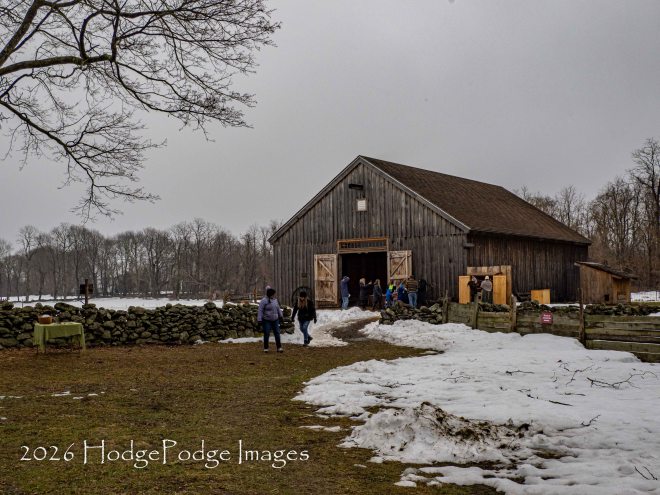
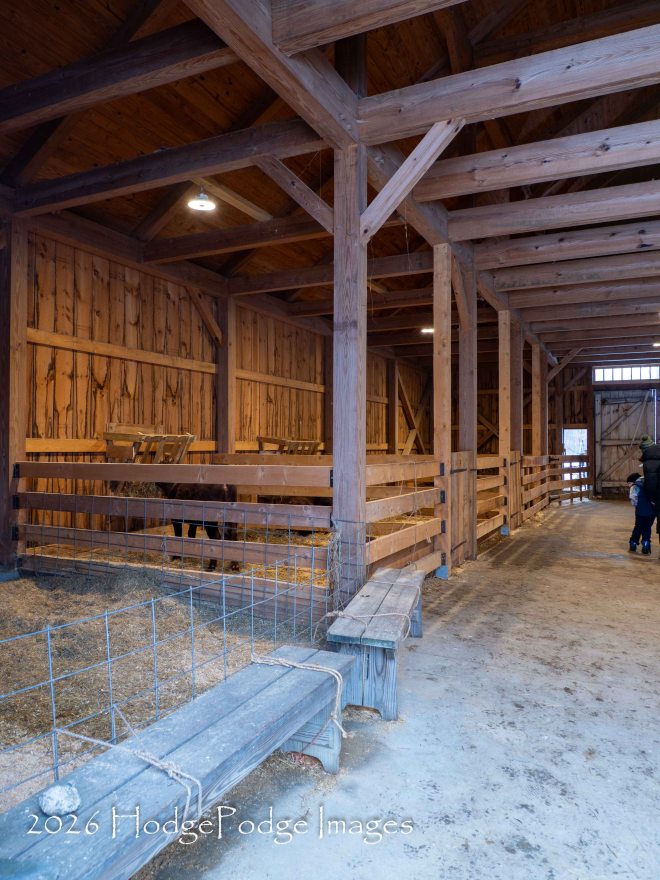
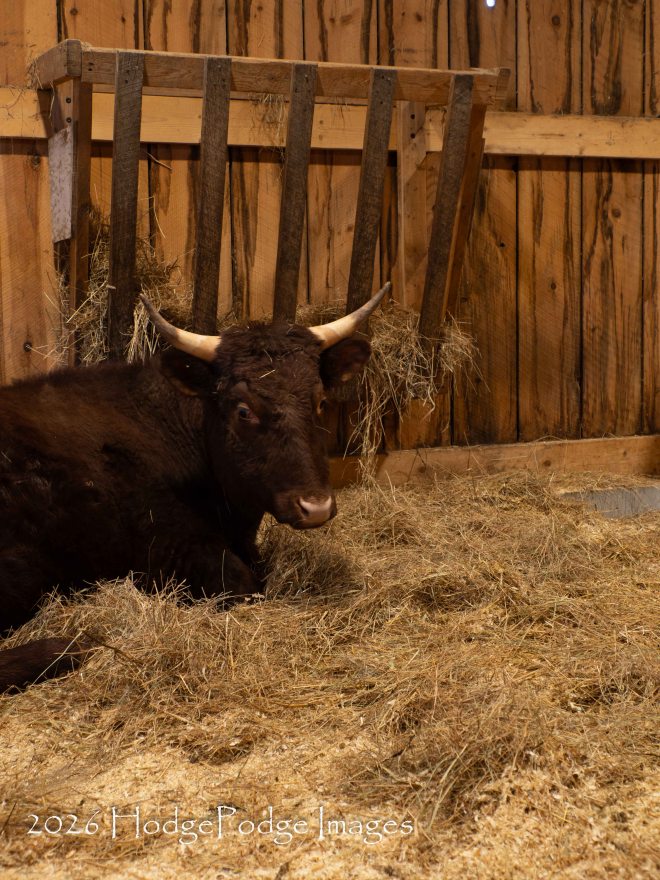
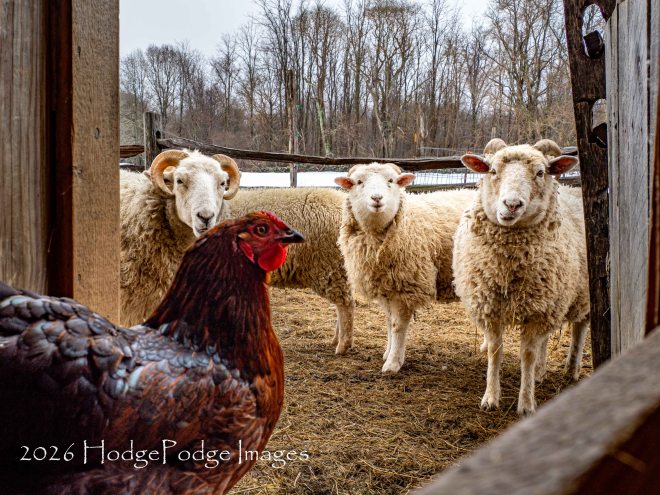
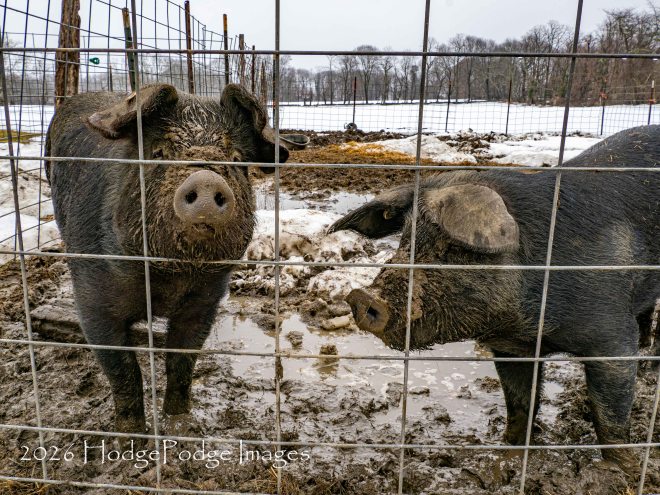
I’m not sure if the Tyska Animal Barn, built in 2021, offers an accurate interpretation of what the farm’s animal housing might have looked like 230 years ago. The first stall on the left was empty, possibly housing the pigs that played in the yard. The second and third stalls each held a red cow, while the fourth contained a run-in for sheep, part of the Old Sturbridge Village flock.
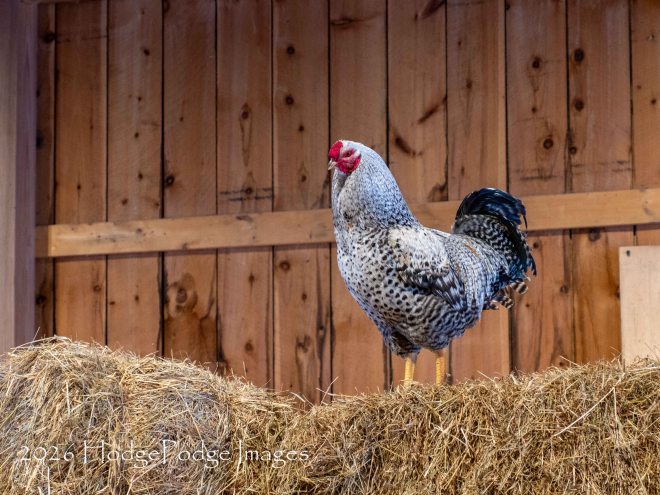
The sheep, Gulf Coast Native/Merino crosses, are probably an important part of the Sheep & Wool Festival being held on May 16. The chickens, which roamed freely, resembled Rhode Island Reds, though the rooster is white. It was fun to watch them wander, especially when they went through a tunnel in the hay bales.
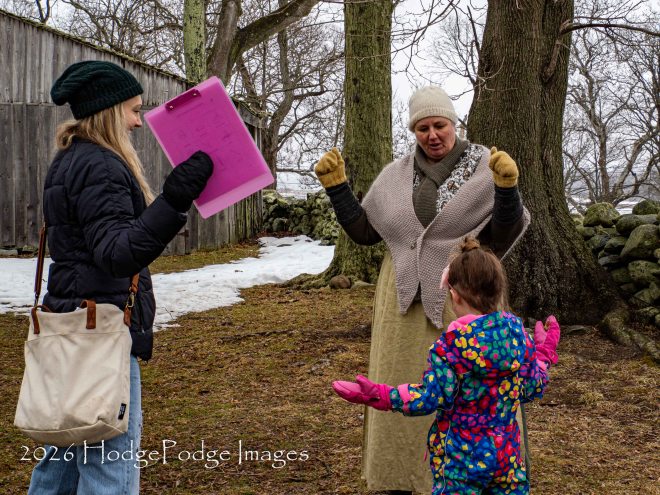
On my way back toward the main house, I passed a docent teaching tree identification, focusing on the sap trees here like Norway maple and sycamore. Interestingly, only the Norway maples appeared to be tapped for sap.
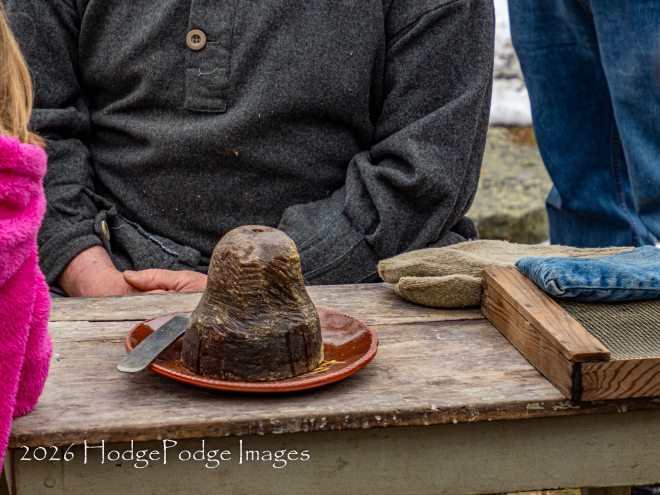
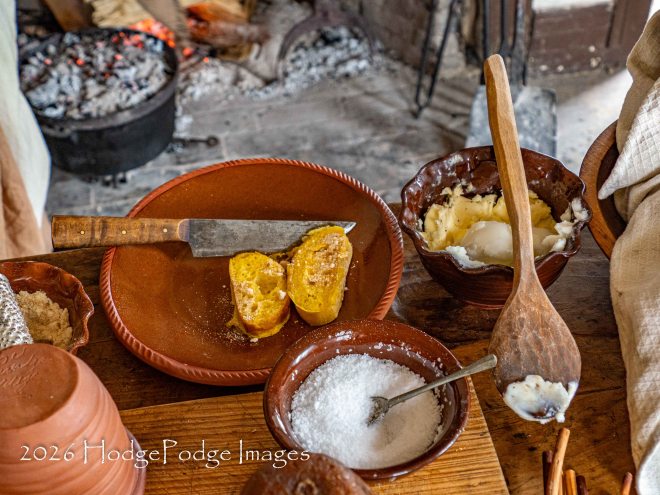
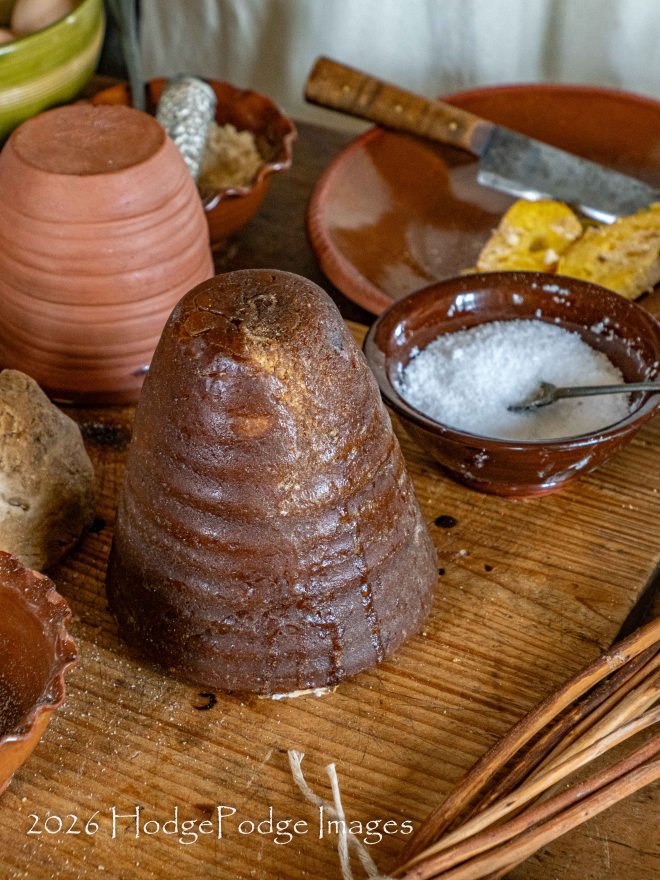
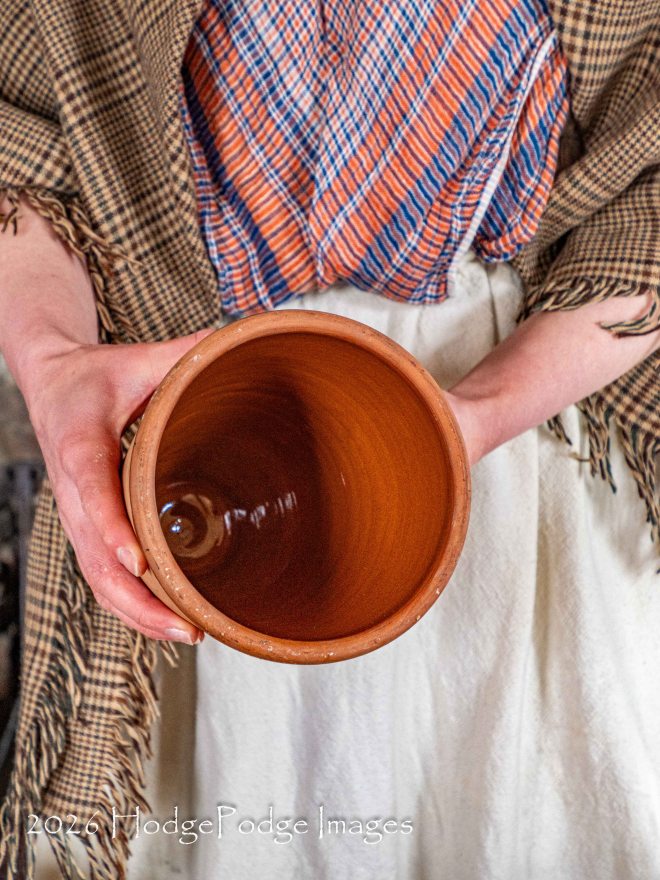
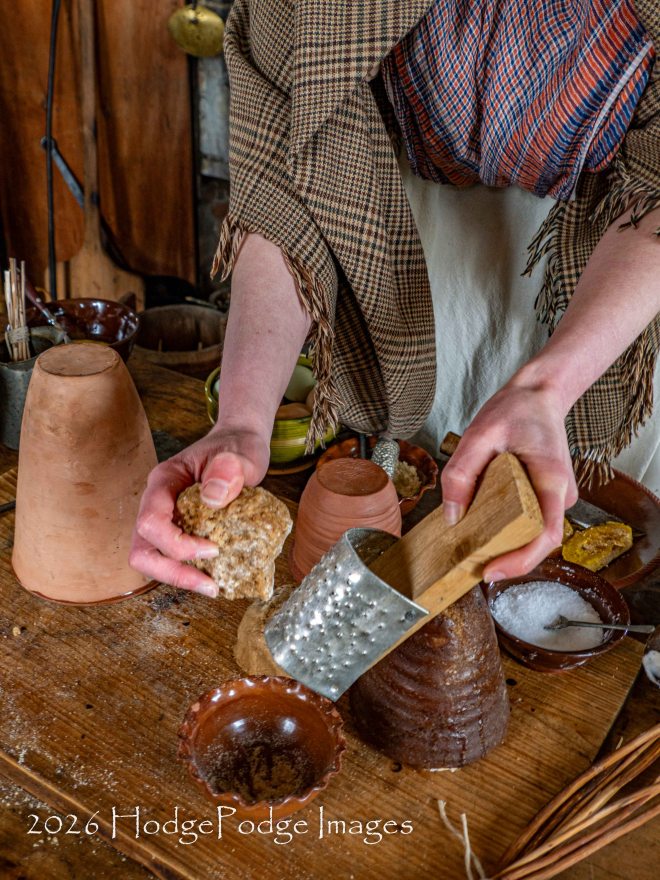
Returning to the kitchen, I found that Sara had prepared French toast in the fireplace and she now demonstrated how she ground nutmeg directly from the seed and maple from the lump that had been formed when the hot sap hardened in the special tall bowls. I don’t believe I’ve ever seen it created like this but it makes perfect sense. Today’s sugar makers create granular sugar after creating the perfect concentration of sugar and keeping it mixing until it dries out. Different temperatures or treatments lead to maple in other forms. Colonists would not have been able to be so precise.
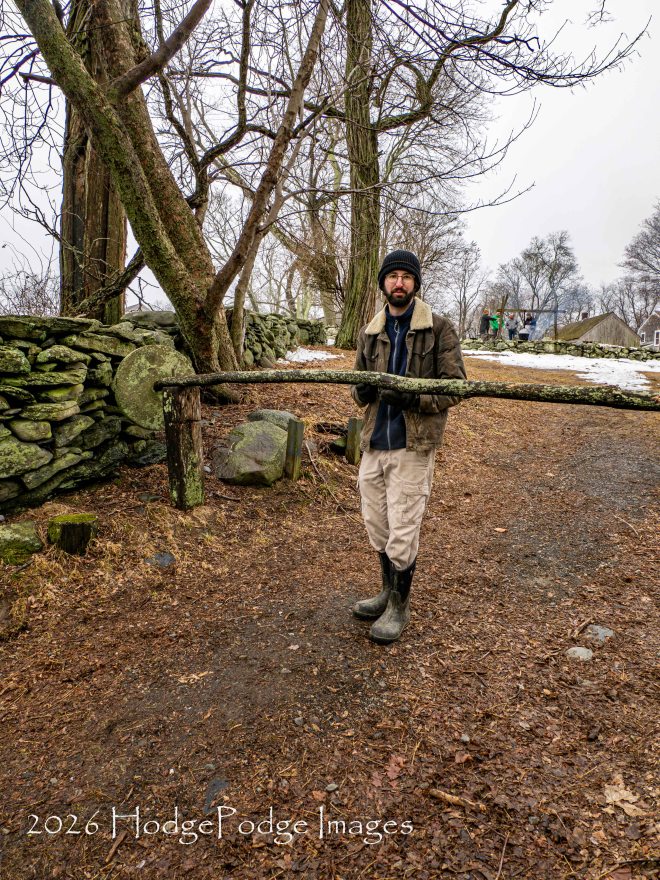
As I prepared to leave campus, I noticed a small millstone near the stone wall gate. Ethan demonstrated how this simple device functions as a counterbalance, making it easier to pivot the gate open.
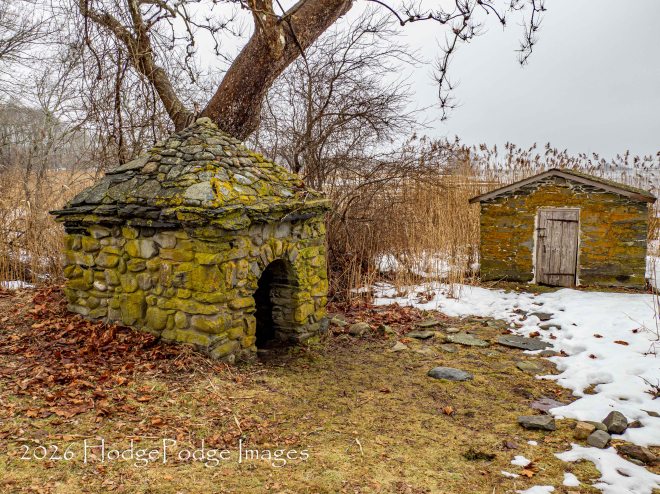
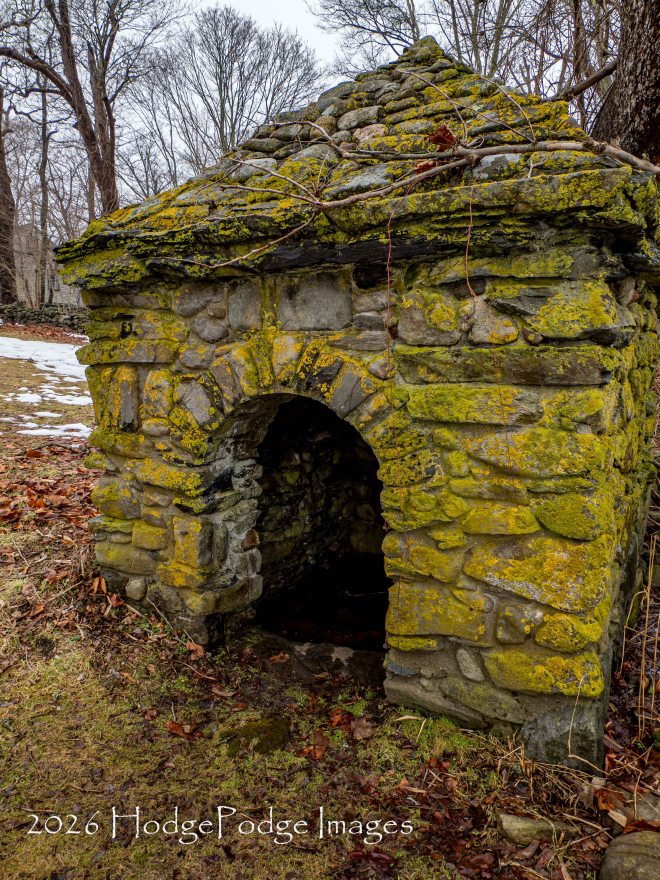
Before leaving, I checked out two small buildings on the edge of the salt marsh. The staff member explained that the smaller building was a spring house, protecting the flow of fresh water. The other building, the cheese house, probably stored cheese and dairy products, keeping them cool. You might be a naturalist if you taste the water in the spring house to determine if it was fresh or brackish. I only tasted a very small amount of water and couldn’t decide if it was fresh from the spring or the snow melt.
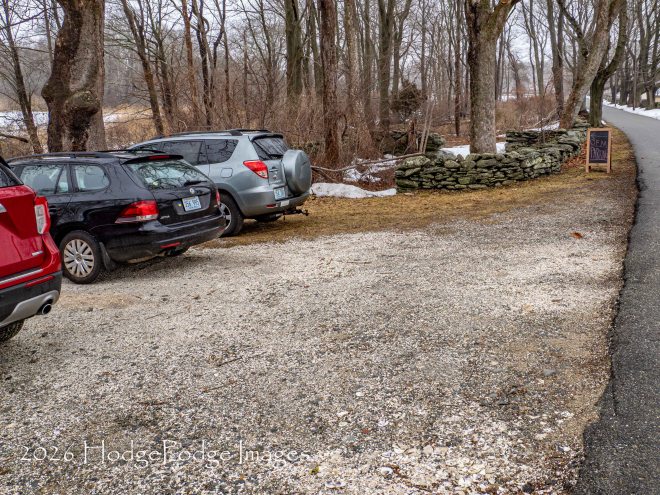
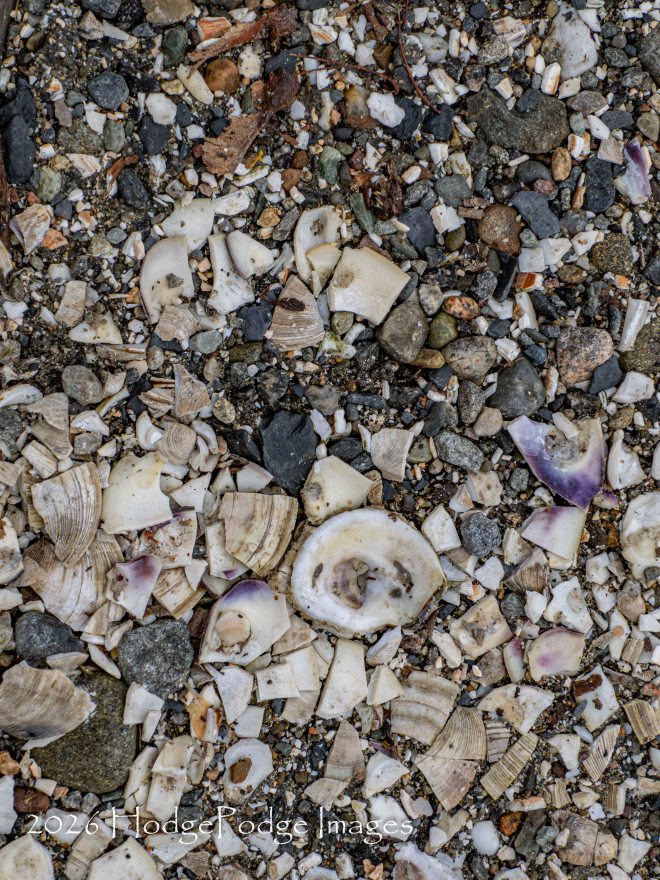
I also noticed that the parking area here was crushed shells, probably more easily obtainable here than crushed stone.
Visiting Coggeshall Farm was a very sweet experience, offering a glimpse into colonial farm life and traditional practices. My camera and I will definitely return, perhaps not for the Sheep & Wool Festival this year, but certainly to explore more of what this historic site has to offer.
(Cross posted with HodgePodgeImages.Blogspot.com)

 HodgePodge Maple
You must be logged in to post a comment.